The Day After the Fireworks
- andreweschmd
- Jul 5
- 4 min read


The Palliative Lens
Andrew Esch
There are places that become part of you.
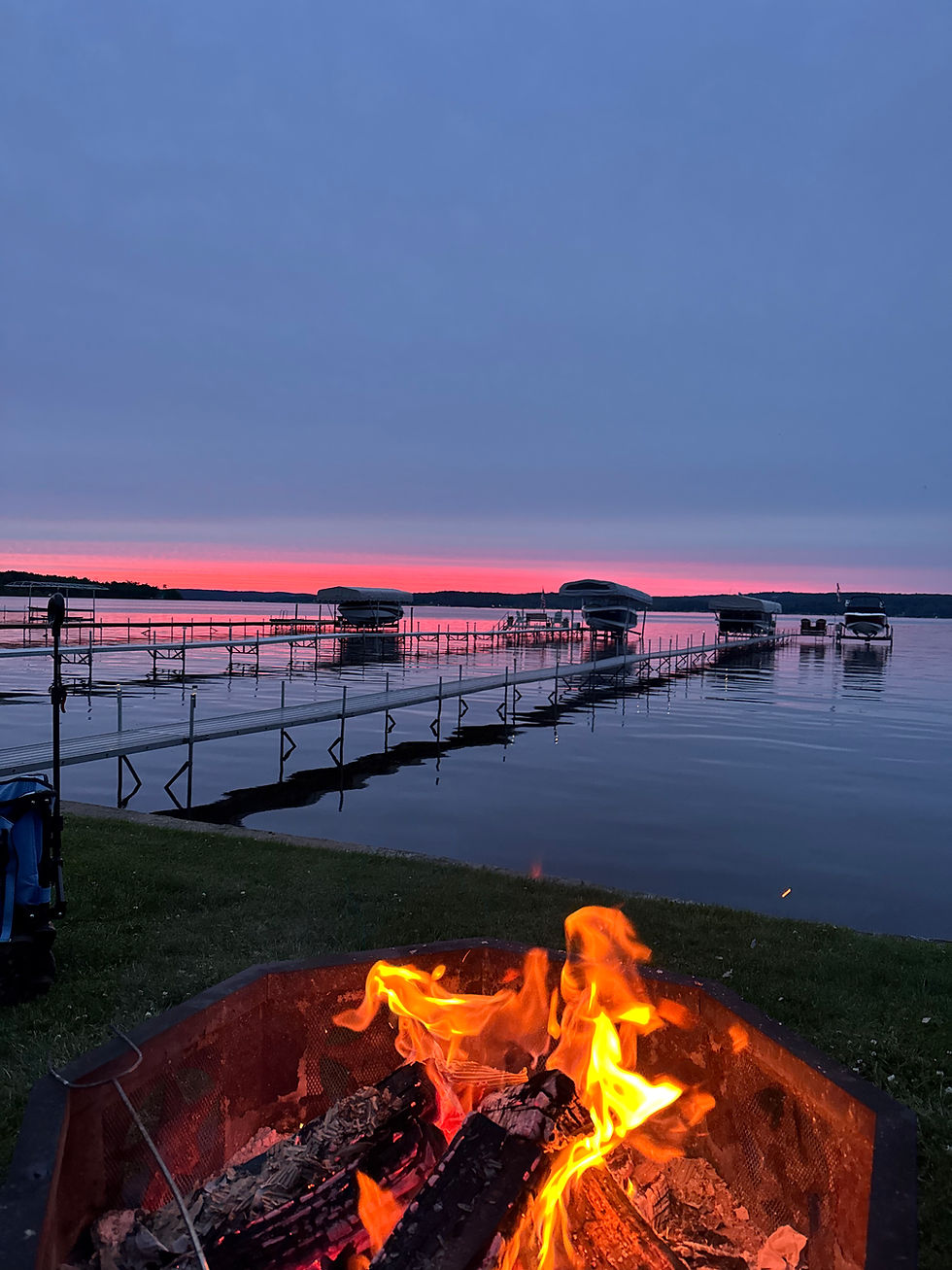
For me, it’s Chautauqua Lake.
Some time in the late 1950’s or early 1960’s my grandfather converted an old garage into a 731 sq ft cottage on 45 ft of lakefront on a road that would become known as Gallup Lane.
I grew up here. I know every bend, every channel marker, every shallow spot.
I’ve celebrated here
I’ve mourned here
I’ve honeymooned here
I’ve lived here
I have memories of mahogany Chris Crafts
I remember every dog that ever chased a ball Into that lake
I remember nights trolling with my dad, convinced that one more pass would produce the fish we’d been talking about all day.
Sometimes it did.
Often it didn’t.
It never really mattered.
The lake was never just about fishing.
It was about being together.
Years later, as a resident and then young attending, after thirty-hour call shifts and another week spent sitting beside hospital beds where lives unraveled faster than anyone was prepared for, I’d drive to the lake completely exhausted.
I didn’t come looking for rest as much as I came looking for something familiar, something that reminded me life wasn’t only measured in consults, CT scans, and family meetings.
Eventually my own kids became part of the story.
Teaching them to cast.
Watching them stand up on water skis for the first time.
Holding the tow rope just long enough for them to find their balance before letting go.
Seeing them wake surf behind the boat with a confidence I never had.
The milestones weren’t recorded in a baby book. They were measured in sunburns, scraped knees, tangled fishing line, and the smiles that only seem to happen when nobody is looking for them.
Evenings always ended the same way.
Steaks over the fire pit.
Smoke in your clothes.
The smell of the lake after sunset.
Conversations that wandered nowhere important, which is exactly why they mattered.
Then came the Fourth of July.
If you’ve never experienced Chautauqua Lake on Independence Day, it’s difficult to explain. As darkness settles, nearly every shoreline lights up. Fireworks launch from docks, pontoons, backyards, and marinas until the lake becomes a ring of fire.
It’s spectacular.
It’s beautiful.
It’s almost too much.
The noise echoes across the water from every direction. Colors overlap before the last explosion has faded.
Children cheer.
Dogs hide.
Adults drink whatever and smile like kids again.
For those few hours, the joy is electric.
Then comes the next morning.
The boats disappear.
The kids pack their cars.
The docks become quiet.
The lake exhales.
Every year I’m surprised by how empty it feels. It’s a sadness that’s difficult to explain because nothing bad has happened.
No one died.
No tragedy unfolded.
The celebration simply ended.
As a palliative medicine physician, that feeling has always made me uncomfortable.
How can I be sad because my family went home when I spend my professional life with families who would give anything for one more holiday together?
How can I mourn the end of a weekend when I have cared for parents who never got to teach their children to water ski or fish?
Patients who never got a vacation.
Grandparents who watched another Fourth of July from a hospital window instead of a dock.
The comparison almost feels selfish.
Until I remember something my patients have taught me over and over again.
Grief is not a competition.
Joy isn’t either.
Being grateful for what you’ve had doesn’t prevent you from missing it when it’s over.
In fact, it’s usually the opposite.
The ache exists because the experience mattered.
The silence after the fireworks is evidence that there were fireworks.
The empty dock is evidence that it was full.
The quiet house is evidence that it echoed with laughter.
In palliative care, we spend so much time helping families prepare for endings that people sometimes assume our work is about death.
It isn’t.
It’s about helping people notice that every ending points to something worth celebrating first. Sometimes it’s a weekend, sometimes it’s a life.
The day after the Fourth isn’t sad because summer has peaked and will slowly give up its fight.
It’s sad because another page has been written in a story that now spans four generations.
I can still picture my grandfather making potato pancakes in the kitchen.
I can still hear my father’s voice over the trolling motor.
My grandmother having us scrub the deck with toothbrushes when we misbehaved.
My mother, now filled with so many of those memories here, that she no longer can come.
Now I hear my own voice telling my children to keep the tip of the ski up or to shift their weight while wake surfing.
Maybe one day they’ll hear themselves teaching their own children on this same lake.
That’s the strange part of memory.
We lose moments the instant we live them.
But somehow they keep multiplying.
The lake taught me that long before medicine did.
Medicine simply gave me the language to understand why.


Comments